The myth that mothers inevitably know their daughters
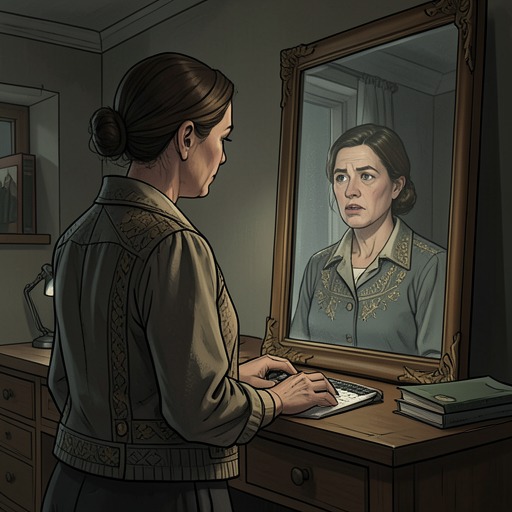
Elena KnowsThe myth that mothers inevitably know their daughters is the belief that maternal closeness grants reliable, even exhaustive, knowledge of a daughter’s inner life. In Elena’s case, it becomes both an argument about Rita’s death and a way of understanding herself as a mother. Her certainty propels her search for an explanation, but the encounter with Isabel makes that certainty untenable: knowing a daughter’s habits and loving her do not necessarily mean knowing what she might do under circumstances her mother cannot imagine.
Maternal certainty and its stakes
Elena’s premise is that motherhood itself gives her privileged access to Rita. She treats maternal knowledge as something inherent in the relationship, not something that must be tested against what the daughter says or does. The conviction offers a firm answer to a question that otherwise leaves her helpless: if Elena knows Rita, then she can know that Rita would not have chosen to die. But the premise also narrows what Elena is prepared to consider. Her certainty about her daughter’s character becomes certainty about a particular act, even when the circumstances surrounding it remain unknown to her.
The contrast between mother and daughter makes this belief more complicated than a simple assertion of closeness. On an earlier train journey, Rita helped Elena with her jacket and pushed her through the train door when her mother was slow to board. Their impatience and quarrel existed alongside practical care. Remembering Rita’s help, Elena recognizes her own effort to keep living despite Parkinson’s disease and her increasing dependence on medication. She then uses that effort to reject the possibility that Rita could have wanted to die. Yet Elena’s struggle to continue is evidence of Elena’s will, not proof of what Rita felt. The comparison reveals how love can make maternal inference feel certain without making it knowledge.
Habit, evidence, and the limits of inference
Elena’s strongest reason for rejecting the official conclusion is a habit she associates with Rita: Rita avoided going near the church on rainy days and feared lightning. When Elena identifies the rain on the day of her daughter’s death, the weather seems to contradict the idea that Rita would have gone to the church voluntarily. For Elena, this detail is not incidental. It is part of the accumulated knowledge of a mother who believes she remembers her daughter’s patterns well enough to recognize what is impossible for her.
That conviction shapes Elena’s response to the authorities. She rejects the police account of suicide and believes that the circumstances point to someone else’s involvement. Inspector Benito Avellaneda meets her, but the case is treated as closed; Elena comes to understand that no substantial investigation has been conducted. She supplies materials and possible lines of inquiry herself, including Rita’s diary, address book, a list of people who knew her, and places Rita had recently visited. She also presses for attention to details such as the rain. Her effort demonstrates the practical force of her belief: maternal familiarity becomes the basis on which she tries to reconstruct events and demand that others listen.
Elena’s insistence, however, does not make her interpretation conclusive. People around her repeat the suicide finding or offer sympathy instead of investigating what she says. Their refusal to hear her compounds her isolation, but being dismissed does not settle the question in her favor either. The novel holds these two limits together: the authorities may fail to take Elena seriously, while Elena’s own knowledge of Rita may still be partial. The habit she remembers is meaningful evidence about Rita’s life, but it cannot by itself reveal what Rita experienced on that particular day.
Isabel’s counterargument: experience changes what seems possible
Elena goes to Isabel seeking help and calling in a debt rooted in their shared past. Their meeting brings another mother’s experience into conflict with Elena’s account. Isabel describes how she had once believed she knew what she would choose, before circumstances made that decision immediate and personal. Her point is not that Elena’s account of Rita is false, but that a person’s prior habits, beliefs, or imagined limits cannot guarantee what she will do when life changes the terms of the question. Thinking one knows what one would do is different from discovering it through experience.
Isabel turns that distinction back toward Rita. If Elena cannot imagine her daughter going to the church in the rain, Isabel asks what could have made Rita do something that had previously seemed unthinkable. She proposes possibilities rather than presenting evidence that settles the case: perhaps Rita encountered an experience so painful or frightening that her earlier fear of the storm no longer determined her actions. This argument unsettles Elena because it places an unknown inner crisis beyond the reach of maternal familiarity. Isabel does not establish what Rita intended; she demonstrates why Elena cannot confidently rule out a choice simply because it contradicts the daughter she remembers.
The exchange also exposes how the two women understand knowledge differently. Elena relies on intimate observation and remembered patterns. Isabel insists that some kinds of understanding arrive only when a person has lived through a situation, and that no outsider can fully substitute imagination for that experience. Her account makes the limits of Elena’s claim visible without denying the affection behind it. The question is not whether a mother can know her child at all, but whether closeness can confer certainty about another person’s private response to an unknown crisis.
What remains of the belief
By the end of the conversation, Elena has not received a definitive explanation of Rita’s death. She repeats that it was raining, while Isabel refuses to treat the weather as an answer in itself. Elena also comes to voice a possibility that her original certainty excluded: that Rita might have found her mother’s illness unbearable. Isabel suggests that Rita may have struggled not with the prospect of inheriting the illness but with seeing Elena live with it. The exchange offers another interpretation, not proof, and its uncertainty matters. Neither woman can recover Rita’s final thoughts simply by claiming to know her.
Their conversation eventually makes room for a different kind of recognition. Elena says that she loved Rita and believes Rita loved her, while acknowledging that their love existed in their own way. When she asks whether she was a good mother, the question receives no simple verdict. The two women share the presence of Isabel’s cat, and Elena reaches out to pet it; their quiet attention to the animal contrasts with the earlier struggle to make one account defeat the other. Elena also says that she still chooses to live despite her illness and her daughter’s death. This does not solve the mystery or erase their difficult relationship, but it separates love from omniscience: she can love Rita without knowing everything Rita felt.
The novel therefore treats maternal certainty as both an emotional resource and a dangerous limit. Elena’s belief gives her the resolve to resist a conclusion she considers unjust and to keep seeking answers when others stop listening. At the same time, her journey forces her to confront the difference between knowing Rita’s habits, knowing that they loved one another, and knowing what Rita might have experienced beyond her mother’s view. The myth is challenged not by a denial of maternal love, but by the recognition that love cannot make another person wholly knowable.